
Medical innovation is changing how healthcare providers diagnose conditions, plan treatments, and monitor patients throughout recovery. Advances in imaging, digital health platforms, minimally invasive procedures, medical materials, and computer-assisted planning enable clinicians to gather more detailed information and make decisions tailored to individual circumstances.
Personalized treatment goes beyond selecting a procedure for a particular diagnosis. It considers a patient’s medical history, symptoms, lifestyle, goals, risk factors, and preferences. When healthcare technology is combined with professional expertise, patients can receive care that is more closely aligned with their needs.
Understanding how these innovations work can help patients become more informed participants in their healthcare decisions. It can also make it easier to compare treatment options, prepare for appointments, and ask meaningful questions about the recommended care.
Use Better Diagnostic Information to Guide Treatment Decisions

Accurate diagnosis is one of the most important parts of personalized healthcare. Before recommending treatment, providers need to understand what is causing a patient’s symptoms and how the condition is affecting the body. Modern diagnostic technology can provide information that may not be apparent through a physical examination alone.
Advanced imaging, digital scans, laboratory testing, and other diagnostic tools can give healthcare professionals a more detailed view of a patient’s condition. Depending on the specialty, these technologies can help identify structural abnormalities, measure changes over time, or determine how a particular condition is progressing.
More detailed information can also help providers distinguish between conditions with similar symptoms. This can reduce the likelihood of pursuing inappropriate treatment and allow clinicians to consider options better suited to the patient’s specific circumstances.
Patients can support the diagnostic process by preparing relevant information before an appointment. Consider keeping track of:
- When symptoms first appeared, and whether they have changed
- Previous diagnoses, procedures, and treatments
- Current medications and supplements
- Family medical history, when relevant
- Activities or situations that worsen or improve symptoms
- Previous imaging or laboratory results
Patients should also ask why a particular diagnostic test is being recommended and how its results could affect the treatment plan. Understanding the purpose of testing can make the decision-making process more transparent.
Match Treatment Options to Individual Health Needs
A treatment that works well for one person may not be appropriate for another. Medical innovation gives providers more options, but choosing the right option still requires an individualized assessment.
Factors such as age, existing health conditions, previous procedures, medications, activity level, and recovery expectations can influence which approach makes sense. Patients may also have different priorities. One person may value minimizing downtime, while another may prioritize long-term results or avoiding a particular type of procedure.
Technology has expanded the number of treatment approaches available in many specialties. Minimally invasive techniques, image-guided procedures, and computer-assisted technologies may allow some patients to receive targeted care with smaller incisions or shorter recovery periods when clinically appropriate.
For example, patients exploring vein treatments may encounter several approaches designed to address different types or severities of vein conditions. Similarly, people considering body contour treatments may have different options depending on their goals, anatomy, and overall health.
Rather than choosing an option because it is new or widely advertised, patients should ask:
- What problem is this treatment designed to address?
- Why is it appropriate for my condition?
- What alternatives are available?
- What are the potential risks?
- How long might recovery take?
- How will we determine whether the treatment worked?
These questions help shift the focus from technology itself to whether it provides meaningful value to the individual patient.
Choose Providers Based on the Complexity of Your Condition

Technology cannot replace clinical expertise. Even highly advanced equipment requires qualified professionals who can interpret information and apply it appropriately.
Patients should consider the type of provider they need based on the complexity of their condition. Primary care doctors often serve as an important starting point for evaluating symptoms, managing ongoing health concerns, coordinating records, and determining whether a specialist should become involved.
For certain vascular conditions, patients may be referred to vascular surgeons for specialized evaluation and treatment. These specialists can assess conditions affecting blood vessels and determine whether medication, lifestyle changes, minimally invasive treatment, surgery, or monitoring is appropriate.
When evaluating a healthcare provider, patients can ask about:
- Education, licensing, and specialty training
- Experience treating the specific condition
- Available diagnostic and treatment technologies
- How treatment decisions are made
- Expected outcomes and potential complications
- Follow-up care after a procedure
The best technology is most useful when it is paired with appropriate clinical judgment. Patients should therefore evaluate both the technology and the professional using it.
Consider Technology That Supports Convenient, Continuous Care
Healthcare does not always happen inside a doctor’s office. Digital platforms, remote monitoring devices, telehealth appointments, patient portals, and electronic records can make it easier for patients and providers to stay connected between visits.
Remote monitoring can allow healthcare professionals to track certain health measurements without requiring patients to travel for every check-in. Patient portals can make it easier to review test results, request appointments, communicate with providers, and access medical information.
These tools can be especially useful for people managing ongoing conditions or recovering from procedures. A home care service, for example, may incorporate digital communication or monitoring tools that help coordinate care outside a traditional clinical setting.
Patients should still consider whether a particular digital service fits their needs. Convenience is valuable, but it should not come at the expense of appropriate clinical oversight.
When evaluating technology-supported care, patients should consider:
- How frequently providers monitor information
- Who reviews remotely collected data
- How quickly concerns are addressed
- How personal health information is protected
- Whether in-person visits are still necessary
- What happens if the technology stops working
Digital healthcare tools are most effective when they complement, rather than replace, appropriate professional care.
Explore Advanced Materials and Techniques for Recovery

Innovation is also changing the materials healthcare professionals can use during treatment and reconstruction. Advances in biomaterials, surgical tools, implants, and tissue-supporting products can provide clinicians with additional options to address complex medical needs.
In orthopedic care, for example, materials used during procedures may be selected according to the patient’s anatomy, injury, bone quality, surgical goals, and expected recovery. Synthetic bone graft putty is one example of a medical material that may be considered during certain orthopedic procedures when a provider determines it is appropriate.
The choice of a medical material should not be based simply on whether it is newer. Providers must consider the patient’s specific circumstances and the available clinical evidence.
Patients undergoing procedures involving specialized materials can ask:
- What is the material designed to accomplish?
- Why is it appropriate for my procedure?
- Are there alternatives?
- What risks or limitations should I understand?
- How could the material affect recovery?
- What follow-up will be necessary?
These questions can help patients understand how technology fits into their treatment rather than viewing a medical product as a solution on its own.
Use Digital Tools to Improve Dental Treatment Planning
Dental care has also benefited from advances in digital imaging, scanning, modeling, and computer-assisted treatment planning. These technologies can help providers collect detailed information about a patient’s teeth and oral structures while making treatment plans easier to visualize.
Digital impressions, for example, can replace some traditional impression techniques and provide detailed digital models. These models can help providers evaluate alignment, plan procedures, and explain potential outcomes to patients.
Clear aligners are another example of technology-supported treatment planning. Providers can use digital models and treatment-planning software to map tooth movement and create a series of customized aligners based on the patient’s needs.
Digital technology can also support cosmetic dentistry services by helping patients and providers discuss aesthetic goals and visualize potential changes before treatment begins.
Patients considering technology-supported dental care should ask:
- What technology will be used during treatment?
- How does it influence the treatment plan?
- What results are realistically achievable?
- How long is treatment expected to take?
- What maintenance will be required afterward?
Technology can improve communication and planning, but the patient’s dental health and long-term needs should remain central to the treatment decision.
Know When Technology Can Improve Access to Immediate Care
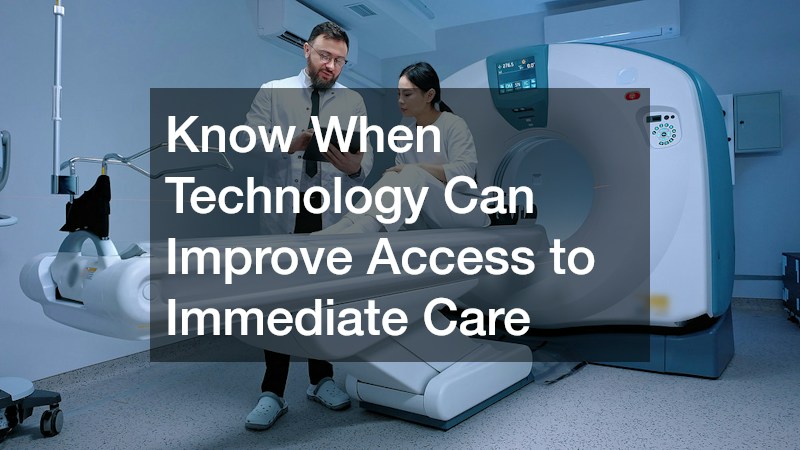
Advances in diagnostic equipment can also support faster evaluation when patients need prompt medical attention. Point-of-care testing, digital records, and modern examination tools can help clinicians gather information efficiently.
An urgent care clinic may use these technologies to evaluate illnesses and injuries that require timely attention but do not necessarily require emergency department services. Examples can include minor injuries, certain infections, or other non-life-threatening concerns.
Patients should understand that urgent care is not a substitute for emergency treatment when serious symptoms are present. Severe chest pain, significant breathing difficulties, major injuries, sudden neurological symptoms, or other potentially life-threatening conditions require immediate emergency evaluation.
For less severe concerns, patients can consider:
- How quickly do symptoms need to be evaluated
- Whether their regular provider is available
- Whether diagnostic testing may be needed
- Whether symptoms are worsening
- Whether the condition could represent an emergency
Technology can make evaluation more efficient, but the urgency of a medical condition should always guide where care is obtained.
Use Patient-Specific Data to Support Better Orthopedic Care
Orthopedic medicine increasingly relies on imaging, digital planning, motion analysis, and other technologies to understand musculoskeletal conditions. These tools can provide information about bones, joints, muscles, and movement patterns that help providers develop more targeted treatment strategies.
An orthopedic clinic may use technology to evaluate an injury, assess structural changes, monitor recovery, or plan a procedure. However, diagnostic information is only one part of the decision-making process.
A patient’s activity level and personal goals can be equally important. A recreational athlete may have different recovery objectives than someone who primarily wants to perform everyday activities without pain. Treatment planning should account for these differences.
Patients can improve communication with their provider by describing what they want to be able to do after treatment. Instead of simply saying they want to “get better,” they can specify goals, such as returning to a particular activity, walking comfortably, or completing work responsibilities.
Patients should also ask about nonsurgical options when appropriate. Depending on the condition, treatment could involve physical therapy, medication, activity modification, injections, surgery, or a combination of approaches.
Follow-up is another important component. Monitoring progress after treatment can help providers determine whether a patient is recovering as expected or whether the plan needs adjustment.
Evaluate Treatment Technology Beyond the Marketing Claims
Medical technology is often presented as a major advancement, but patients should look beyond promotional claims before choosing a treatment. A procedure being described as “advanced” does not automatically mean it is the best option for every patient.
Patients should consider the evidence supporting a technology, the provider’s experience, potential risks, expected benefits, and available alternatives. They should also understand whether the technology is widely established or still being evaluated.
A practical evaluation checklist includes:
- Identify the condition the technology is intended to treat.
- Ask what evidence supports its effectiveness.
- Find out whether there are meaningful risks or limitations.
- Compare the technology with established alternatives.
- Ask how the provider measures treatment success.
- Understand the expected recovery process.
- Review potential costs and insurance considerations.
- Consider whether a second opinion would be useful.
Patients should be especially cautious when claims seem too broad or promise guaranteed outcomes. Responsible healthcare communication should acknowledge that results can vary between individuals.
A second opinion can also be valuable when treatment involves significant risks, major costs, surgery, or long-term commitments. Another qualified provider may offer a different perspective or explain alternatives that were not previously discussed.
Medical innovation provides healthcare professionals with more tools to understand conditions and develop individualized treatment plans. Advanced diagnostics, digital platforms, specialized materials, and technology-assisted procedures can help make care more targeted and responsive to patient needs.
However, personalization depends on more than technology. Effective care combines accurate information with clinical expertise, patient preferences, treatment goals, and appropriate follow-up. Patients can play an important role by asking questions, understanding their options, and communicating what matters most to them.
The goal of medical innovation should ultimately be to support better-informed decisions and more appropriate care. When technology is selected and applied according to an individual’s circumstances, it can become a valuable part of a healthcare experience designed around the patient.
